


A Bollywood celebrity moment rarely matters (much). But when Alia Bhatt publicly praised The Parent's Tao Te Ching and the internet latched onto it, it was a signal that "achievement parenting" is losing cultural dominance — and parents are actively searching for an off-ramp.

The global parenting app market is already worth over a billion dollars annually and projected to exceed $4 billion by the early 2030s. Almost all of it is built around tracking, optimizing, and monitoring children. Sleep trackers. Milestone dashboards. Feeding logs. The entire category assumes the child is the variable to be optimized. Even the adjacent parental control software market — itself a multi-billion-dollar segment — is oriented around managing the kid, not stabilizing the adult.
But the actual pain has shifted. Parents aren't drowning because they lack data on their toddler's sleep cycles. They're drowning in stress, comparison, and burnout. The software layer hasn't caught up.
If you've been hunting for a wellness business idea or a micro-SaaS concept in the parenting space, this is the rare category where the demand is institutional-grade and the supply is nearly zero.
The Demand Is Measurable
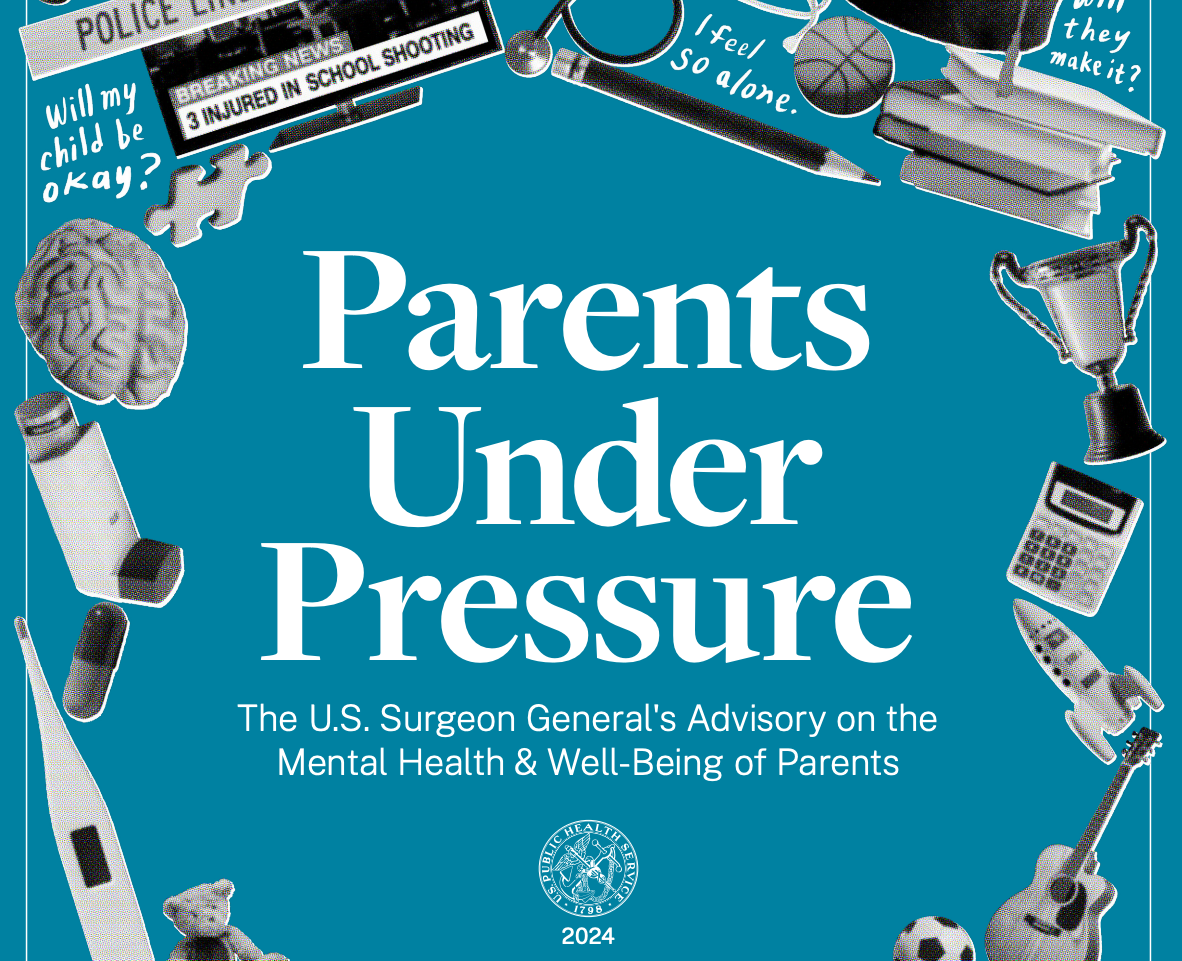
In August 2024, the U.S. Surgeon General issued a formal advisory titled Parents Under Pressure, declaring parental stress a public health concern. The numbers are stark: 41% of parents say they are so stressed most days they cannot function — more than double the rate among non-parents. Nearly half describe their stress as "completely overwhelming." 24% meet the clinical threshold for a mental health condition. Among working parents specifically, an Ohio State study found roughly two-thirds reported some level of burnout, with direct links to depression, anxiety, increased alcohol use, and harsher parenting.
A separate Ohio State study found that 57% of parents reported burnout driven by perfectionist expectations and a "culture of achievement" — and that this burnout led to worse behavioral and emotional outcomes for their children. The harder parents try to optimize, the worse everyone feels. Meanwhile, U.S. time-diary research shows fathers' childcare time has risen roughly 150% since the 1960s, and mothers' time has climbed substantially alongside rising work hours. Parents are doing more of everything and recovering from none of it.
Parent stress is the new frontline health category. The highest-leverage "parenting product" you could build right now is parent regulation — not another child optimization dashboard.
Why the Existing Market Can't Serve This
Two competitive clusters dominate, and both are structurally misaligned with the problem.
Optimization parenting apps — sleep trackers, milestone monitors, feeding logs — own the category. BabyCenter alone claims 400 million parent users. These products monetize anxiety, even when they claim they don't. Every dashboard showing where your child "should" be creates comparison pressure. The core mechanic of measuring and improving the child is precisely what burned-out parents are recoiling from.

Generic mindfulness apps like Calm and Headspace handle general stress fine, but they aren't designed around parenting-specific triggers: the pickup meltdown at 5:47 PM, the in-law who questions your decisions, the shame spiral after you yelled at bedtime. A ten-minute body scan doesn't address any of that. Scenario-specific interventions under five minutes are far more consistent with how parents actually seek support than a 20-minute guided meditation.
Nobody owns "parent mental health" as a consumer category yet. The closest entrant is Canopie, which raised approximately $3.7M in seed funding and is focused narrowly on perinatal and postpartum symptoms — positioned as a clinical preventive solution, not a general parent mental health brand. The broader, ongoing parent mental health space remains wide open.
Category Framing

Category: Parent Mental Health (anti-optimization by design)
Promise: No child tracking, no streaks, no dashboards, no performance parenting.
Outcome: Lower stress, less shame, better co-regulation, fewer spirals, and more "good enough" days.
The "no metrics" stance doubles as a brand moat. It differentiates you from parenting trackers and from generic mindfulness apps that still rely on gamification and progress mechanics. When your core design principle is "you can't fail this app," you've built something people want to belong to. No streak counters, because missing a day shouldn't feel like failure. No progress dashboards, because parenting isn't a project with KPIs. No child profiles, because the child isn't the patient here. The absence of measurement is the feature.
How the Moat Gets Built
Three layers of defensibility, all achievable by a small team.

Unlock the Vault.
Join founders who spot opportunities ahead of the crowd. Actionable insights. Zero fluff.
“Intelligent, bold, minus the pretense.”
“Like discovering the cheat codes of the startup world.”
“SH is off-Broadway for founders — weird, sharp, and ahead of the curve.”


