


The wedge: "Make your brand feel like it has a 2005 internet footprint again — on purpose."
A repeatable system for building owned, remixable, screenshot-able destinations that audiences actually share.
Start as a high-ARPU micro-agency pulling $10K–$30K MRR within 90 days on a two-person team.
Graduate into tooling, templates, and a marketplace that compounds beyond any single retro platform.
By month 12, a small team of three can push past $70K/mo gross. By month 18, the product layer brings the whole operation to $80K–$100K/mo with improving margins every quarter.
The Window Is Open
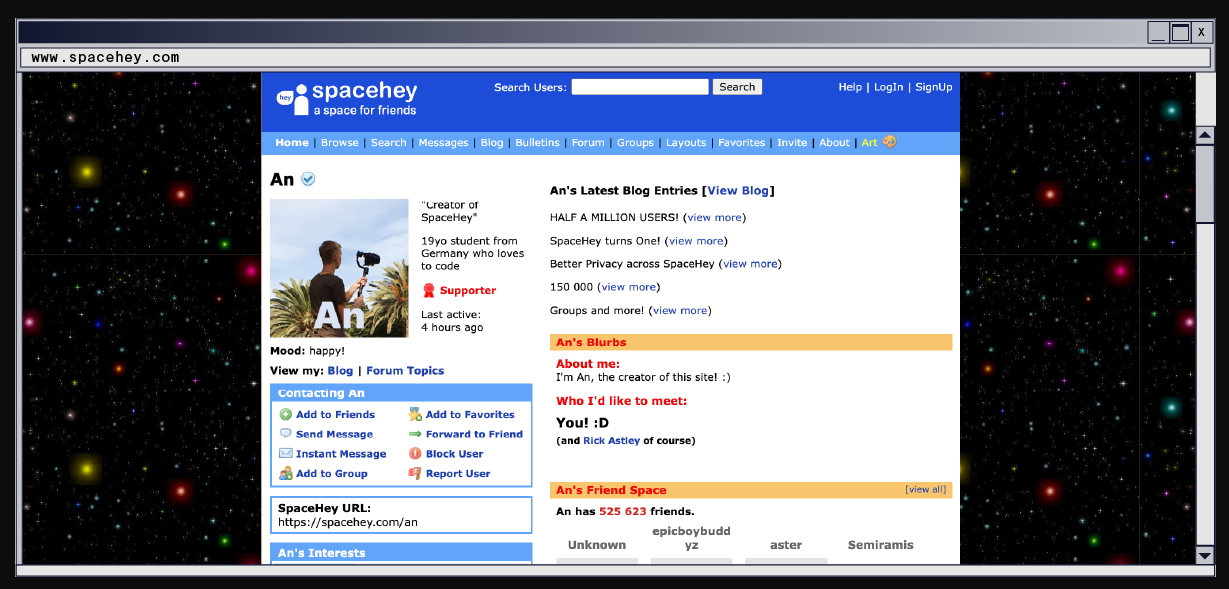
SpaceHey, a MySpace homage built by a German teenager who never used the original, has crossed 1 million registered users, pulls roughly 2.5 million monthly visits, and averages 7+ minute sessions with 11 pages per visit. Neocities, a free hosting platform reviving the GeoCities ethos of hand-coded personal websites, grew from roughly 55,000 hosted sites in 2015 to over 1 million by early 2025 — with its community skewing predominantly under-30. Many of these users never experienced the original GeoCities era. They're building the messy, weird internet they wish they grew up with.
Even if every one of these platforms stays niche, the demand signal is loud: audiences want personal, human spaces again. And nostalgia sells when it reads as authentic. A 2025 study in Advances in Consumer Research found that digital nostalgia intensity significantly increases Gen Z brand affinity, trust, and purchase intention — with authenticity as the key moderator. 68% of Gen Z respond positively to throwback marketing even when they didn't live through the era. Brands using nostalgic packaging saw a 16% sales lift in 2024–2025. Coca-Cola relaunched its glass bottle with a '90s jingle and saw a 15% sales spike.
But most executions stop at retro styling. Almost nobody is selling retro behavior: the guestbooks, the Top-8 social proof, the badge drops, the way people actually used the early internet as a social tool.
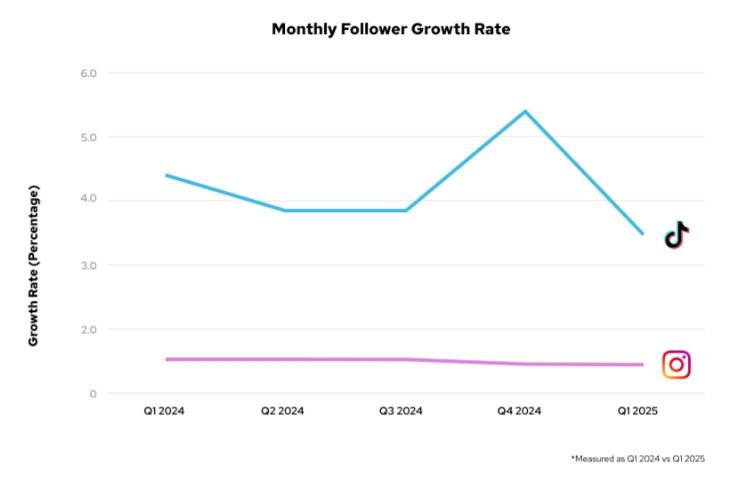
Meanwhile, the algorithmic feed is losing its monopoly on trust. Consumers are more likely to share content via dark social channels — DMs, group chats, texts (63%) — than on open social media platforms (54%). TikTok shares for brands increased 60% quarter-over-quarter in early 2025, while average monthly follower growth dropped 27% year-over-year. Instagram DM replies and private stories now drive 70% of Gen Z engagement.
Retro experiences are inherently screenshot-able and forward-able. A custom guestbook, a badge collection, a "Top 8" partners list — perfect group-chat fuel. They generate distribution through the exact channel that's growing fastest, and they cost nothing in ad spend.
The Opportunity, Precisely
"We build you a SpaceHey profile" is a novelty service. It plateaus at freelance rates and dies the moment the platform changes its terms. Platform risk, easy replication, and zero compounding value make it a dead end.
What works: you sell a new owned-media unit. A deliberately low-polish destination — custom HTML/CSS, guestbooks, badges, Top-8-style social proof, embedded music, faux-diaries, collectible pages, fan art boards — plus the distribution and iteration playbook that makes it convert.
The owned microsite is always the home base. Nostalgia platforms like SpaceHey, Tumblr, and Neocities are distribution channels. Email capture is the revenue engine. This architecture eliminates platform dependency while exploiting platform attention.
The critical positioning shift: don't sell "a cool retro site." Sell a share-and-email engine that happens to look like 2005. Anchor every conversation on the metrics — screenshot share rate, email opt-in rate, earned reach in dark social, referral lift. The retro aesthetic is the hook. The business outcomes are the sale.
What You're Actually Selling
Cultural Translation
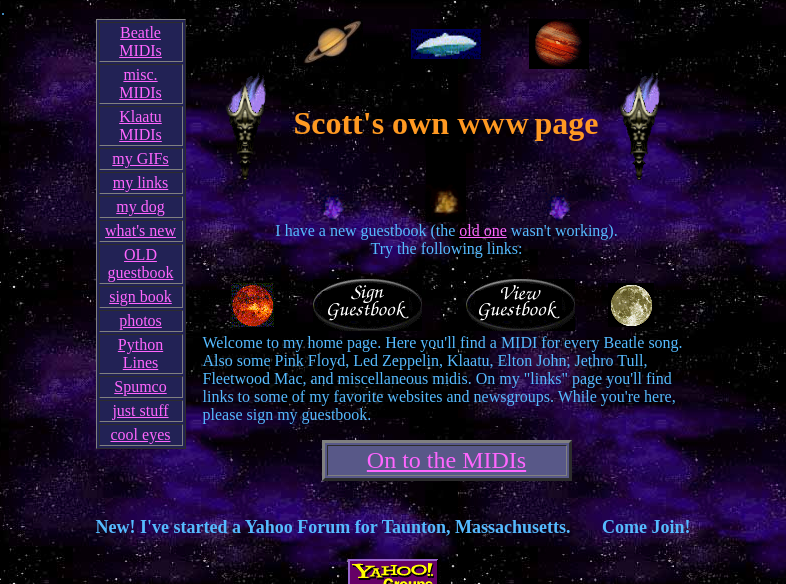
Most agencies can do retro design. Fewer can do retro behavior: how people actually wrote, flexed, expressed identity, and formed micro-status in early internet spaces. The guestbook comments that felt real. The embedded song that said something about who you were. The cursor trails that were embarrassing and endearing at the same time.
Unlock the Vault.
Join founders who spot opportunities ahead of the crowd. Actionable insights. Zero fluff.
“Intelligent, bold, minus the pretense.”
“Like discovering the cheat codes of the startup world.”
“SH is off-Broadway for founders — weird, sharp, and ahead of the curve.”


