


Two people meet in a Discord server. One can design. The other can prompt Claude into shipping production code by Tuesday. They hack on a project over the weekend, push to a shared repo, maybe even take a Stripe payment. Nobody signs anything.
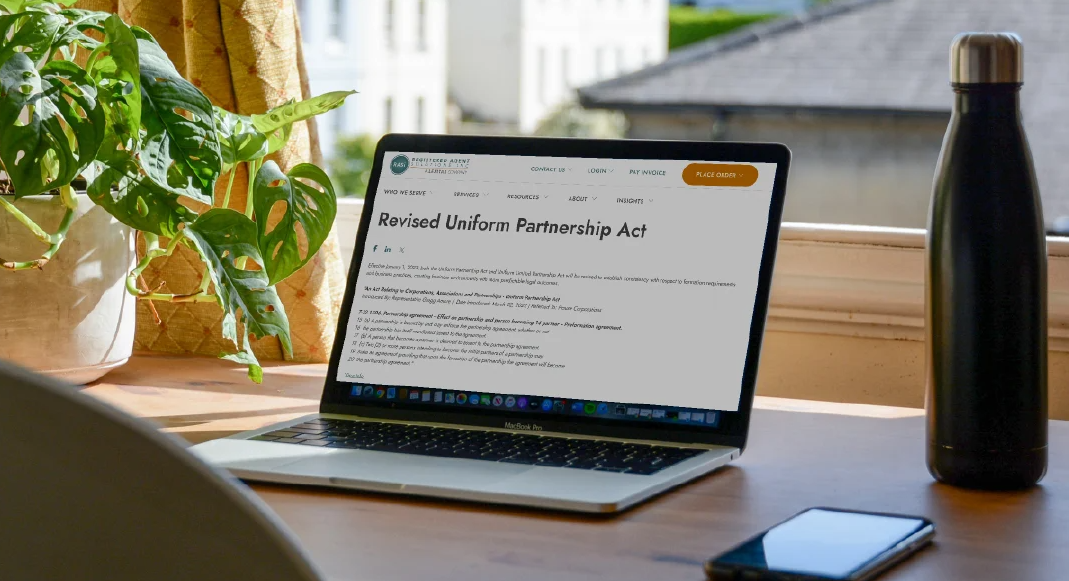
Under the Revised Uniform Partnership Act (RUPA), adopted in some form across roughly 44 U.S. states, they may have just formed a legal partnership. Section 202(a) is blunt: "the association of two or more persons to carry on as co-owners a business for profit forms a partnership, whether or not the persons intend to form a partnership." Receiving a share of profits — like splitting Stripe revenue from a weekend hack — creates a legal presumption of partnership unless it fits narrow exceptions like debt repayment. Intent doesn't save you. Conduct does the talking.
This is a known pattern in partnership law that's resurfacing at scale because AI collapsed the time between "casual collaboration" and "revenue-generating product." Vibe coding made building with strangers normal. The legal system hasn't caught up.
The surface-level problem is "don't get sued by your Discord co-builder." Fine as a distribution hook. But the more common and more expensive failure mode is subtler: you build something valuable, then can't raise, sell, or even confidently charge because the IP chain-of-title is fuzzy. Who owns the repo? Who owns the code the AI generated from prompts two people wrote? Who has authority to license it? Investor diligence kills deals over exactly this ambiguity. The real tax isn't legal fees. It's lost upside.
So the product here isn't a PDF. It's clean provenance — a micro SaaS idea built around legal automation for indie hackers and vibe coders who are shipping real products before they've sorted out who owns what.
100 community subscriptions at ~$299/month plus a base of indie users gets you past $640K ARR, with every new Discord server and hackathon cohort compounding the install base. The community tier alone can carry the business. Individual seats are gravy.
The Opportunity
Build the default collaboration rails for informal internet work — the startup idea sitting at the intersection of legal tech and the AI builder economy. Start as an instant sandbox agreement. Evolve into a lightweight collab identity layer that sits where collaborations actually begin: GitHub and Discord.
The wedge: A 60-second flow that produces a signed, plain-English "we're exploring, here's what happens to IP/money/liability" agreement, attached to a repo and a channel.
The one-liner: "Before you share a repo, share expectations."
The destination: Becoming the standard used by indie hacker communities, accelerator cohorts, open-source side projects, and AI tool builders collaborating across the internet.
The open source world already proved that standardized legal primitives scale collaboration. Contributor License Agreements (CLAs), used by Google, Apache, and Microsoft, define contribution rights clearly so projects can accept code from strangers without ambiguity. GitHub's own documentation emphasizes that without licensing clarity, default copyright rules apply and collaboration stalls. But CLAs solve for open-source contributions to established projects. Nobody has built the equivalent for two strangers building a for-profit thing together in a Discord channel.
The global legal tech market hit roughly $26.7 billion in 2024 and is projected to reach $46–55 billion by 2030. Contract lifecycle management is the largest segment. But virtually all of that investment targets law firms and corporate legal departments. The millions of indie builders, hackathon teams, and Discord collaborators generating IP every week have nothing built for them.

Your strongest early buyers aren't individual vibe coders — they're the institutional stakeholders who feel responsible for clean IP and clean cap tables. Hackathon organizers carrying liability exposure. Accelerator operators who need clear chain-of-title before demo day. Large community admins whose reputation is on the line when member projects blow up during diligence. Sell to the people who already worry about this problem professionally, and individual adoption follows as a downstream default.
The Product: Three Modes, Not One Template
Ship one generic agreement and you'll be either too generic to trust or too legalistic to use. The play is opinionated defaults: a menu, not a form. Open source proved this works. People don't want custom law every time. They want a standard they can pick from a list. Start with the following 3 frameworks before we get to MVP:

Unlock the Vault.
Join founders who spot opportunities ahead of the crowd. Actionable insights. Zero fluff.
“Intelligent, bold, minus the pretense.”
“Like discovering the cheat codes of the startup world.”
“SH is off-Broadway for founders — weird, sharp, and ahead of the curve.”


